
Science confirms what my intuition has always known: surrounding ourselves with beauty isn’t a caprice, it’s a biological necessity. Neuroaesthetic studies, like those of neurobiologist Semir Zeki, have shown that when we contemplate something we consider beautiful, the brain’s pleasure centers are activated and dopamine is released. Our nervous system responds to harmony.
It’s not superficial, it’s physiological.
From Survival to Design
My home is my personal space, my refuge. My temple. The place where I recharge.
That’s why I take care of every space and every corner to make it visually pleasing. Order isn’t just about aesthetics: it’s about efficiency. When I need something, I find it effortlessly. I save time, but above all, I save mental energy.
Spaces that aren’t visually harmonious bother me slightly… Like when a painting is crooked. I tolerate it for a while until I can’t anymore and I need to do something about it. Adjust. Reorganize. Create visual coherence.
The search for harmony isn’t obsession: it’s regulation.
Bringing the Forest Inside
In that search for harmony, plants arrived. During the pandemic, I began collecting plants of every possible species. Little by little, my house became my own jungle, and the plants became my “friends,” my personal refuge. A recipient of care that gradually revealed their personalities to me.
In that process, I discovered that plants need a protective layer on the soil. Mulch helps retain soil moisture so the plant can absorb nutrients.
I could buy it, but something inside me wanted another solution. So I left the soil exposed… until I found my own answer.
Decorating the Earth
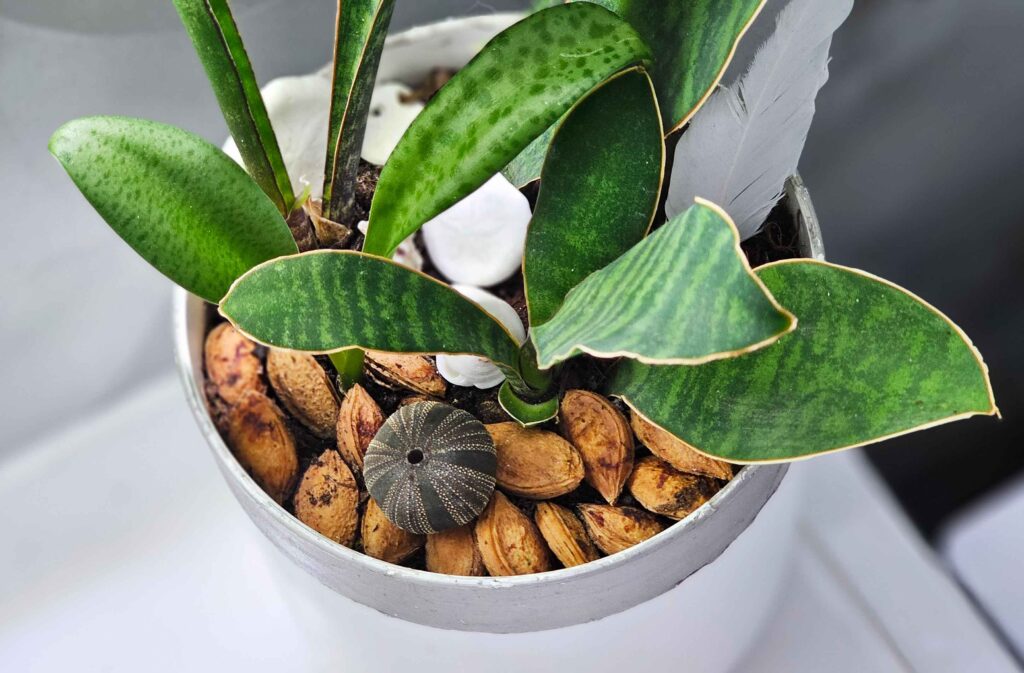
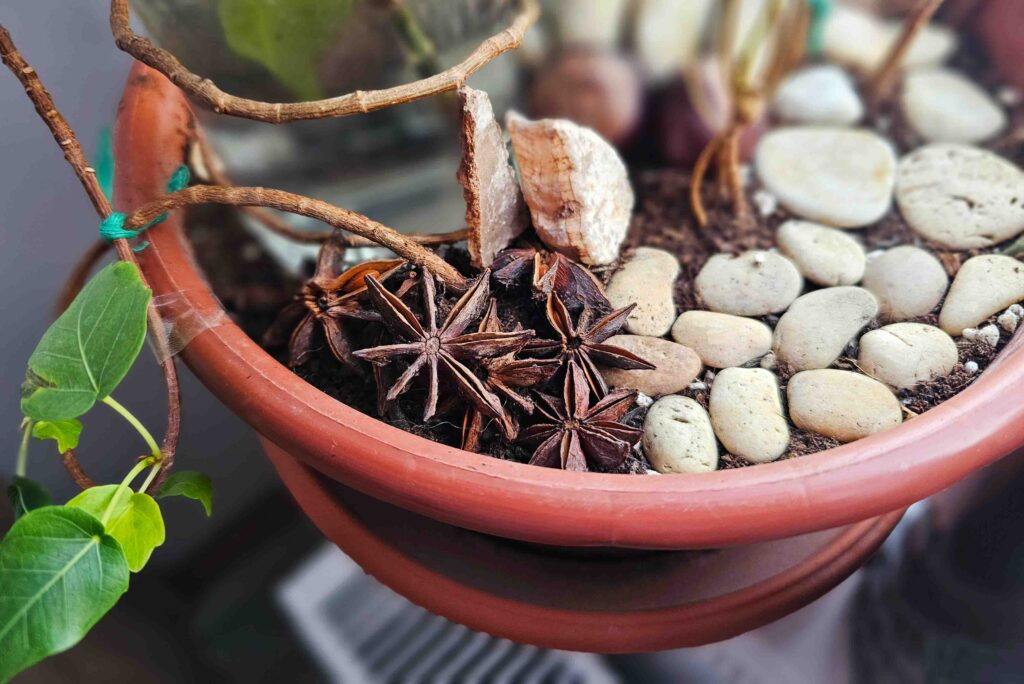
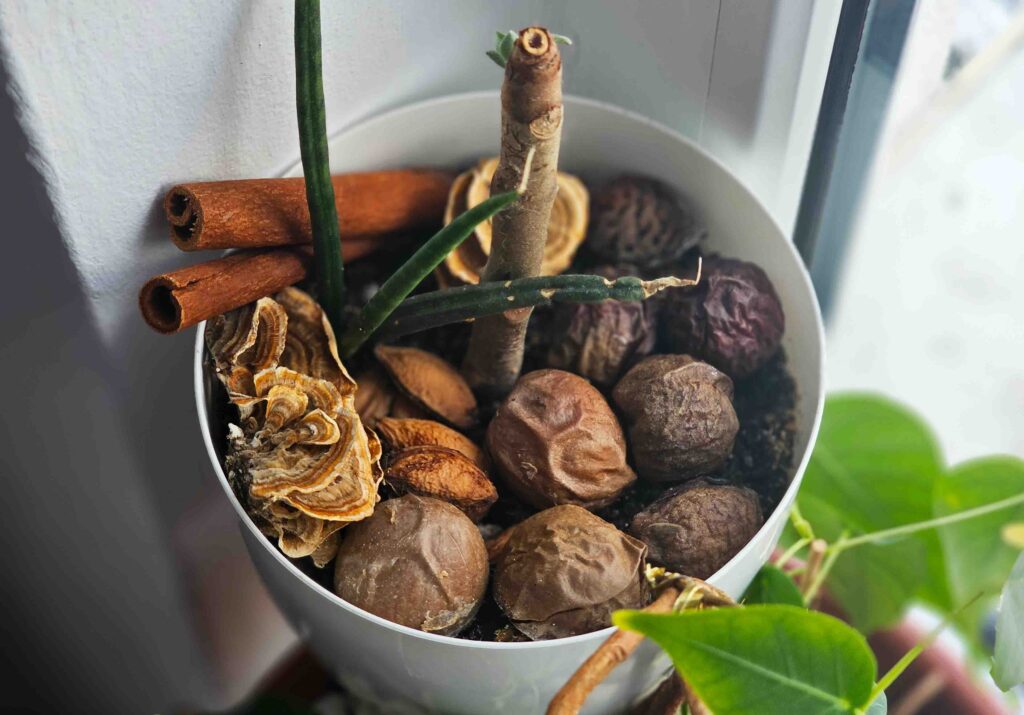
Beyond seeking harmony in my personal spaces, I also seek harmony with Mother Earth whenever possible. And that’s why I recycle and reuse what I can. That’s where avocado, peach seeds, star anise, and cinnamon sticks that no longer smell come in.
For me, they’re not just kitchen scraps; they’re little treasures, allies for my plants, because when I collect them, they become the mulch my plants need. And not only that, but they also become a form of creative exploration.
The soil becomes the canvas, the seeds the colors, and my hands the brushes.
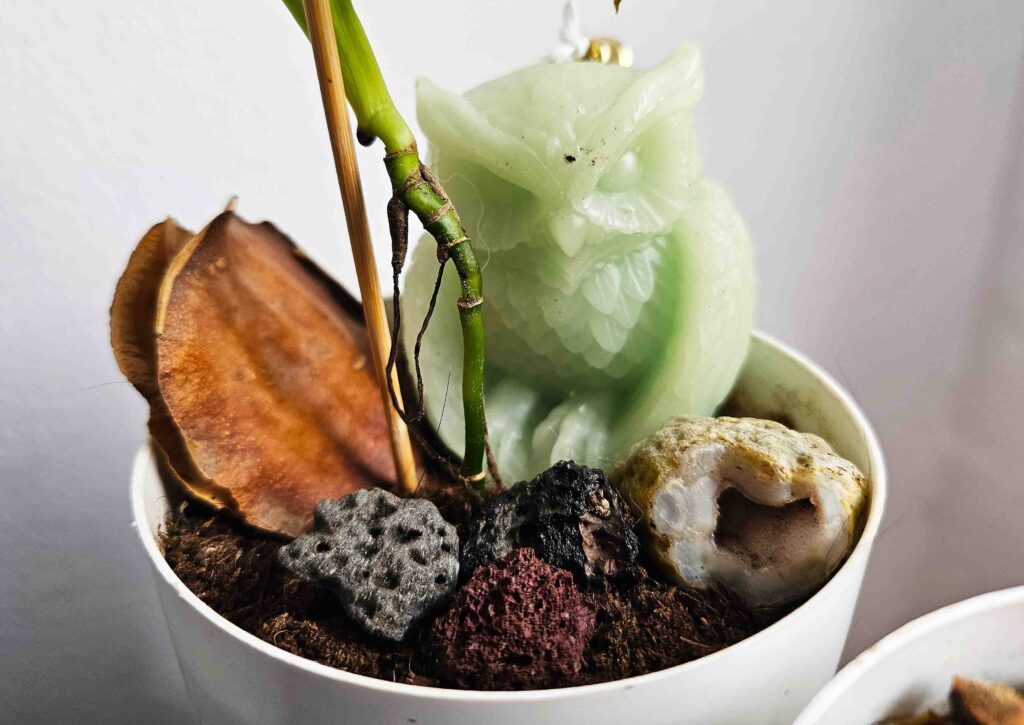
I decorate the pots with seeds.
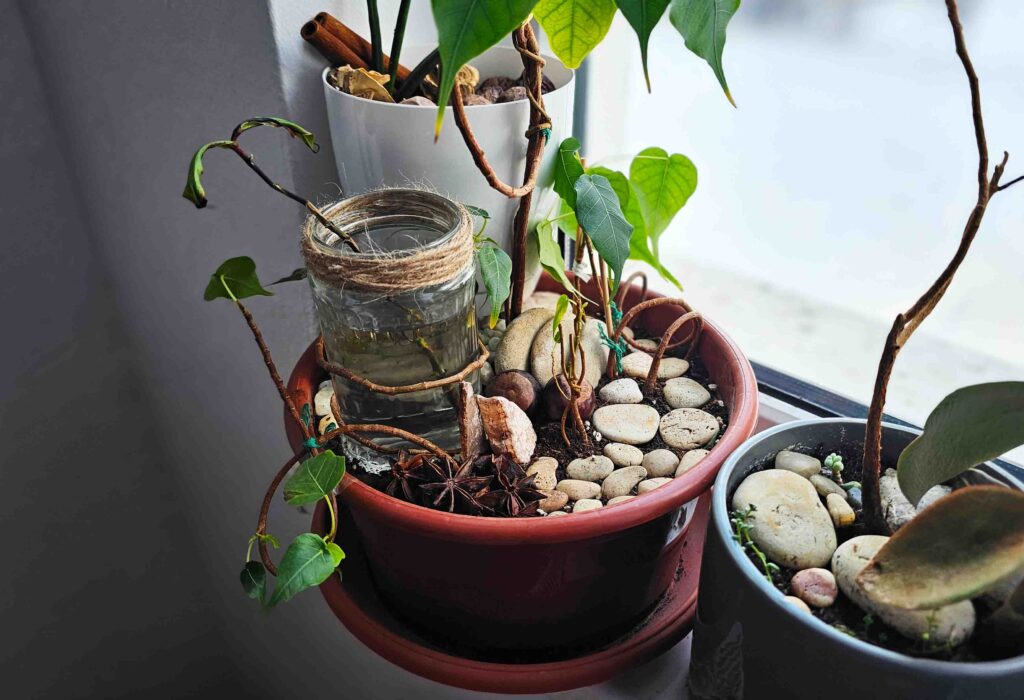
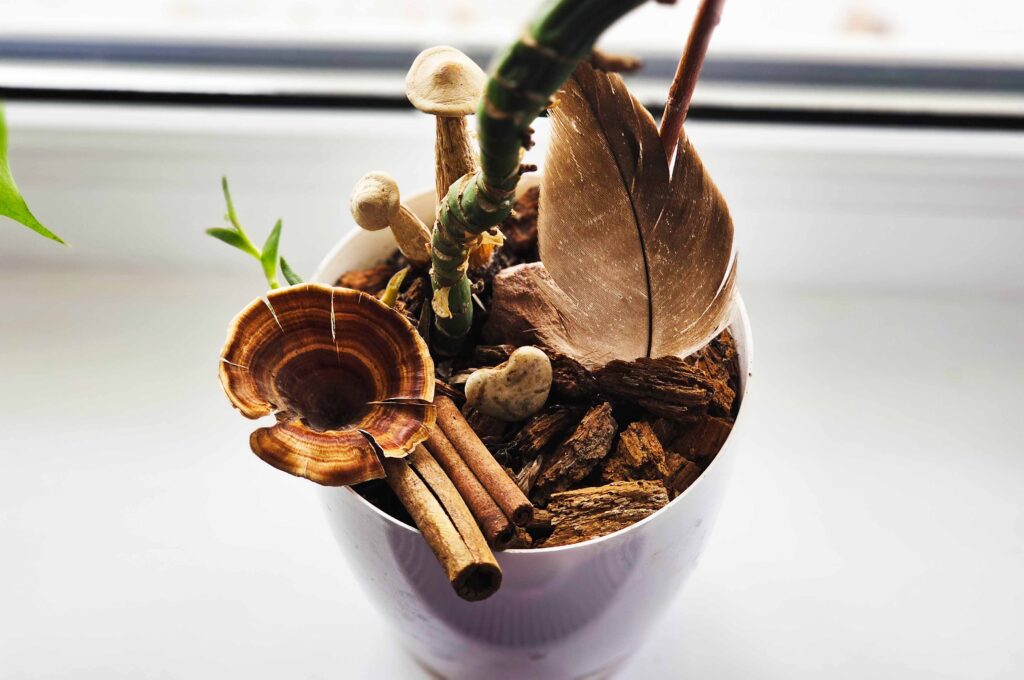
I could simply scatter them randomly on the soil, but I prefer to create micro-landscapes. Small, intentional compositions on each pot. Textures, volumes, layers.
Plant Day
When watering day arrives, some plants are selected for a “hairdressing” session: I remove dry leaves, adjust proportions, and clean stems. Not for perfection, but so the plant has visual balance.
Then I start “playing” with seeds, stones collected on my travels, and feathers found on walks in the forest.
I experiment by mixing plant species or even placing smaller pots on top of larger ones to fill the gaps.
In the bathroom, I decorate the pots with snails and seashells. They reinforce that feeling of water and cleanliness.
More than decoration
Decorating my pots, beyond being eco-friendly and beneficial by enhancing the visual quality of my surroundings, is a form of connection.
Each element has a place, a story, a memory. Each arrangement is intentional. And by interacting with each detail, I feel I have a very clear mental inventory of what I own and what surrounds me.
I’m not just decorating plants.
I’m designing my vibrant environment.
Harmony doesn’t appear by accident. It’s built.
And sometimes it starts with something as simple as the soil in a pot.
Final confession
Am I the only one who feels like a dry leaf disturbs my peace, or do you also become a ‘botanical hairdresser’ on weekends?
I would love for this article not to end here. I’ve enabled the option to upload photos in the comments so we can see the micro-landscapes that inhabit your home. Whether it’s a stone from a trip, a feather found in the park, or that avocado seed that refuses to be thrown away, upload your photo below and tell us the story of your peaceful corner.